The Complete Regina Giovanna Guide
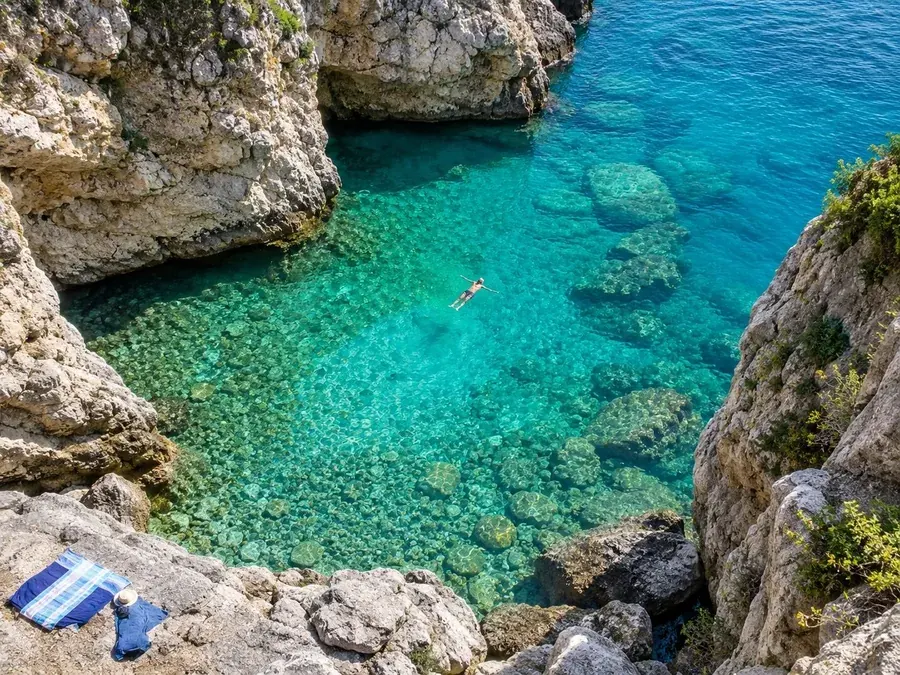
I grew up on Via Capo, a few minutes above the pool, and I have been walking down that lane and paddling round the cape from Marina Grande since I was small. I am not a guide and have never worked for anyone who sells trips here. It is the most beautiful swim on the peninsula. At 11:00 on an August Sunday I would still send you to Puolo instead.
Going by land or by sea?The pool is open to anyone who walks down from Via Capo; nobody sells a ticket to it. What you can book is a way to arrive from the water: a two-hour kayak or paddleboard tour from Marina Grande with a swim stop in the pool, or a short boat trip past the arch. The tours refund in full up to 24 hours ahead.
Compare the tripsWhat it is, and why it has that name
The Bagni are a small pool of sea water at Punta del Capo, roughly triangular, closed in by limestone rocks and joined to the open sea by a narrow passage under a natural arch. Around it, on the headland, are the remains of a Roman seaside villa: walls in opus reticulatum, barrel-vaulted rooms, big cisterns. It was built between the 1st century BC and the 1st century AD, with earlier phases possible, and is traditionally identified as the villa of Pollius Felix that the poet Statius praised in Silvae II.2. Some archaeologists place Pollius’s villa elsewhere, on the Puolo side of the cape, and nothing carved in stone settles it.
“Bagni” means bathing, not a Roman bath house. The queen is usually said to be Joanna II of Naples, who reigned from 1414 to 1435, though some sources name Joanna I. The story that she swam here and had her lovers drowned afterwards is legend; no document puts either queen in this pool. The villa, the poem and the queen goes into all of it.
No tickets, no turnstiles, no bookings
Nobody sells a ticket to the Bagni. There is no gate, no booking and no time slot, and you can walk down at any hour. The only visitor cap I can find on record was 300 people at a time in summer 2020, during COVID; the sites that talk about limits or booking in 2025 and 2026 cite no ordinance. What you will not find is a bar, a toilet or much shade, and there are not enough bins, so bring what you need. The site sits in Zone C of the Punta Campanella marine protected area, and that is about as much management as it gets. When a website offers you “tickets for the Bagni”, it is selling a trip. Access and rules in 2026.
The walk down, and the walk back up
From Piazza Tasso it is about 3.2 km along Via Capo, 40–50 minutes each way, with stretches that have no pavement. The red EAV bus, line 008 “A” since 8 June 2026, takes about 10 minutes to the stop “Via Capo – Regina Giovanna”; buy the ticket before you board, and check EAV’s own timetables rather than an old guidebook, because the line names have changed. From the brown sign for the Roman ruins, the lane drops about 700 m and roughly 80–90 m to the sea: 15–20 minutes down, between stone walls and olive groves, over steps that are broken in places and slippery near the bottom.
Coming back up takes longer, in the heat, and people underestimate it every summer. The lane is not accessible for wheelchairs or pushchairs, and I would think twice with small children. Even the ambulances stop at the top. The lane, step by step.
Arriving by sea
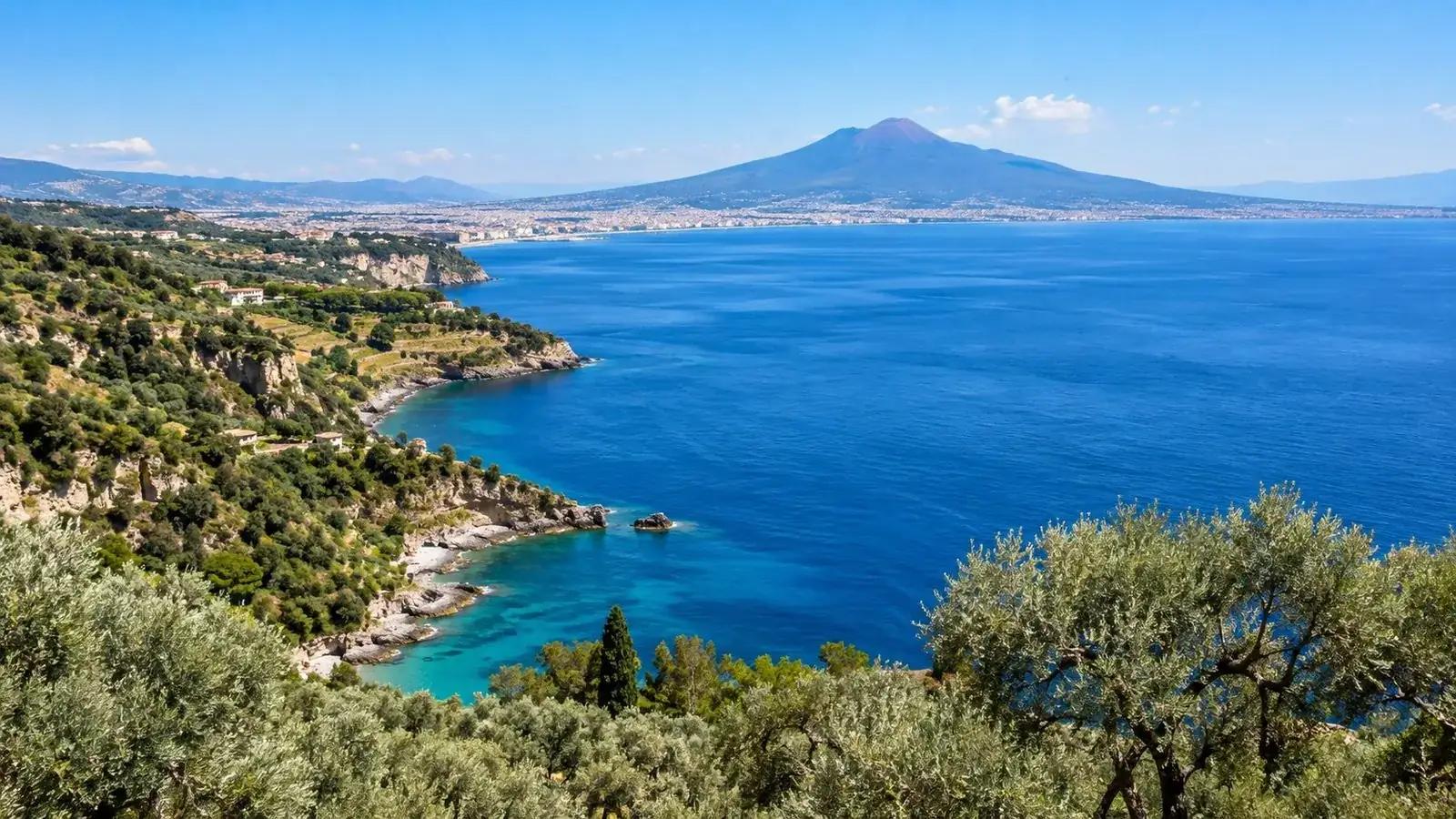
The other way in is the one the Romans used. The small-group kayak tour leaves from Via Marina Grande 110 and lasts two hours: a 10-minute safety briefing, a paddle along the cliffs, then in through the arch for a photo stop and about 30 minutes of swimming in the pool before you head back. Joanna, who reviewed it, put the distance at “around a mile roughly”. You get a life vest, a dry bag and a guide, and the base has the changing room, toilet and shower that the pool lacks. The SUP tour does the same on a board, but in wind the operator puts people in kayaks instead.
The one-hour boats are a different thing. Their itineraries list the Bagni as a photo stop, about 10 minutes, passing by; any swim happens elsewhere, weather permitting. Nice trips, but they will not put you in the pool. Kayak, SUP or boat, by type of visitor.
When to go
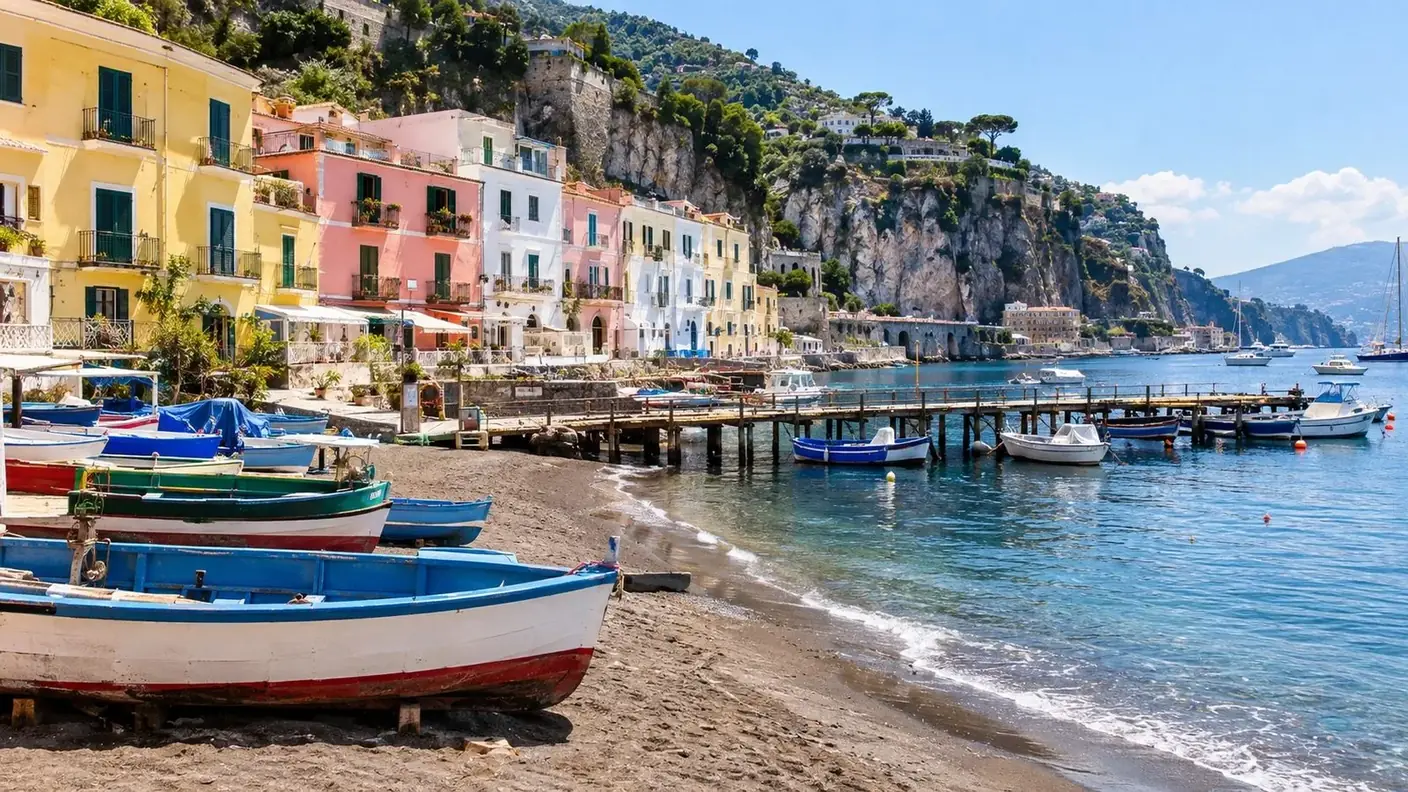
In July and August the rocks are full by about 10:00, and press reports talk of thousands of people a day, with queues on the steps. Go early in the morning or late in the afternoon, and on a weekday if you can. May, early June and September are the months I would choose. The pool faces west, so the evening light is lovely, but on foot you want daylight for the climb; from a kayak or a board the sunset is the easy part. When to go, month by month.
What I would tell a friend
Wear water shoes: you get in from rocks and pebbles, not sand. Carry more water than you think, because the nearest is a grocer up on the road. Go early or late, and skip the middle of an August day entirely. The pool itself is a safe, sheltered swim: the ring of rock keeps the water calm. Just don’t jump or dive from the rocks, because the bottom is uneven, and slip in from the ledges instead. And take your rubbish back up with you. Volunteers were down there clearing it again on 20 September 2026. Swimming and safety has the rest.
Arriving by sea
The small-group kayak tour below leaves from Via Marina Grande and spends about half an hour at the pool. If you would rather stand up, the kayak, SUP and boat options are compared here; if you are walking, read what the lane down is like and the swimming and safety notes first. The live price and times are in the booking widget.
Frequently asked questions
Do you need a ticket for the Bagni della Regina Giovanna?
No. It is open to anyone at any hour, with no booking or time slot; the tours sold online are ways of arriving by sea, not entry tickets. Access and rules in 2026.
How long is the walk down to the pool?
About 700 m from the top of the lane on Via Capo, 15 to 20 minutes down and longer back up. Every way to get there.
Is it safe to swim at the Bagni della Regina Giovanna?
Yes. The rock ring keeps the pool calm; get in from the rocks rather than jumping, and bring water, as there is no bar or toilet. Swimming and safety.